


3,200-Year-Old Egyptian Inscription May Reveal the Location of the Lost City of Mesun
A 3,200-year-old inscription discovered near an ancient Egyptian military road may help archaeologists identify the location of the long-lost city of Mesun, also known as Mesen.
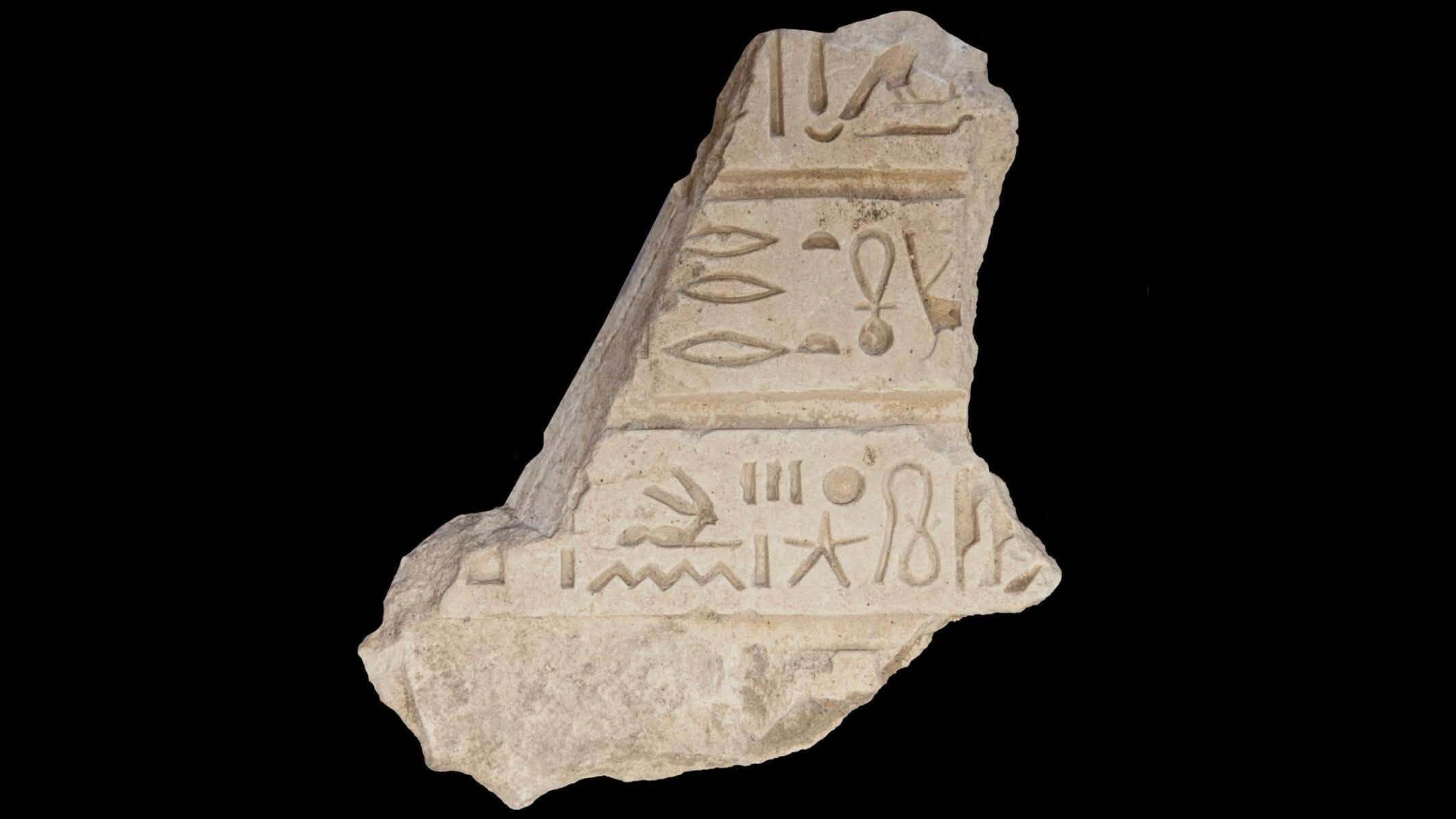
The inscription was found at Tell Abu Seifi, an archaeological site near the Suez Canal and the northern Sinai Desert. It refers to Ramses II, who ruled Egypt from approximately 1279 to 1213 B.C., and describes the falcon-headed god Horus as “the lord of the city of Mesun,” according to a translated statement from Egypt’s Ministry of Tourism and Antiquities.
Researchers also uncovered the remains of a temple dedicated to Horus at the site. Although the temple is now almost completely destroyed, its presence may provide an important clue linking Tell Abu Seifi with the ancient city mentioned in the inscription.
Could Tell Abu Seifi Be the Lost City of Mesun?
Tell Abu Seifi lies along the ancient Way of Horus, a fortified military route that connected the eastern Nile Delta with the southern Levant. The road was used by Egyptian armies traveling toward Canaan, Lebanon and Syria.
Hesham Hussein, head of Egypt’s Delta-Sinai Archaeology Department and leader of the research team, said the evidence suggests that Tell Abu Seifi may be the location of Mesun. However, he emphasized that additional archaeological research is needed before the identification can be confirmed.
“We are unable to provide reliable estimates of its full range or population at this time, as its archaeological identification remains uncertain,” Hussein told Live Science.
Detail of an inscription written in the name of Ramses II.
Image credit: Egyptian Ministry of Tourism and Antiquities
Evidence Linking Mesun to the Way of Horus
Peter Brand, a history professor at the University of Memphis who was not involved in the excavation, said the location and archaeological evidence make the identification plausible.
Several fortresses were built along the Way of Horus, and the area near modern-day Qantara may have served as a staging point for Egyptian troops heading into the Middle East. During the New Kingdom period, Egypt conducted military campaigns to expand and protect its empire, making settlements along the route strategically important.
Brand noted that the new inscription mentions Ramses II restoring a statue of Horus at Mesen. A similar statue pedestal was previously discovered at Tell Abu Seifi, providing another possible connection between the site and the ancient city.
Earlier discoveries at Tell Abu Seifi have also produced evidence associated with the name Mesen. These include a bronze seal from the Ptolemaic period, which lasted from about 304 to 30 B.C., and a Ptolemaic coffin bearing a similar reference to Horus, “Lord of Mesen.”

Ruins at Tell Abu Seifi may form part of ancient Mesun.
Image credit: Egyptian Ministry of Tourism and Antiquities
Why Horus Was Important at Mesun
Horus appears to have held particular religious importance in the region. In ancient Egyptian religion, Horus was a falcon-headed deity associated with the sky, kingship and warfare.
Brand said the temple of Horus at Mesen may have been the most important religious center in the area. The combination of the temple, the inscription naming Horus as the lord of Mesen and the previously discovered statue pedestal strengthens the case for identifying Tell Abu Seifi with the lost city.
Archaeologists Say More Evidence Is Needed
Not all researchers are ready to confirm that Tell Abu Seifi was Mesun. Archaeologist James Hoffmeier said the evidence is promising but that discoveries such as pottery and additional inscriptions would help establish the site’s identity.
One challenge is that inscriptions referring to Mesun have been found at other locations in the region, including the fortress of Kom el-Khorzum near the Suez River and the fortress of Char in the northwestern Sinai Desert.
Gregory Mumford, an anthropology professor at the University of Alabama at Birmingham, suggested that Mesun may have referred to a broader region rather than a single settlement. This possibility could explain why related inscriptions have appeared at several nearby sites.
Other Egyptologists have also described the discovery as exciting while cautioning that more information is needed, particularly a detailed study of the hieroglyphic inscriptions and the surrounding archaeological remains.
Ongoing Excavations May Solve the Mystery
Research at Tell Abu Seifi is continuing. Archaeologists hope that further excavations will clarify the size, date and function of the settlement and determine whether it was truly the ancient city of Mesun.
Historical records also mention a second settlement named Mesun in southern Egypt, adding another layer of complexity to the investigation. For now, the Ramses II inscription and the remains of the Horus temple provide some of the strongest evidence yet for locating the lost Egyptian city near the Way of Horus.
Are you fascinated by mummies, pharaohs and hieroglyphics? Test your knowledge with an Ancient Egypt quiz.
Source: www.livescience.com