


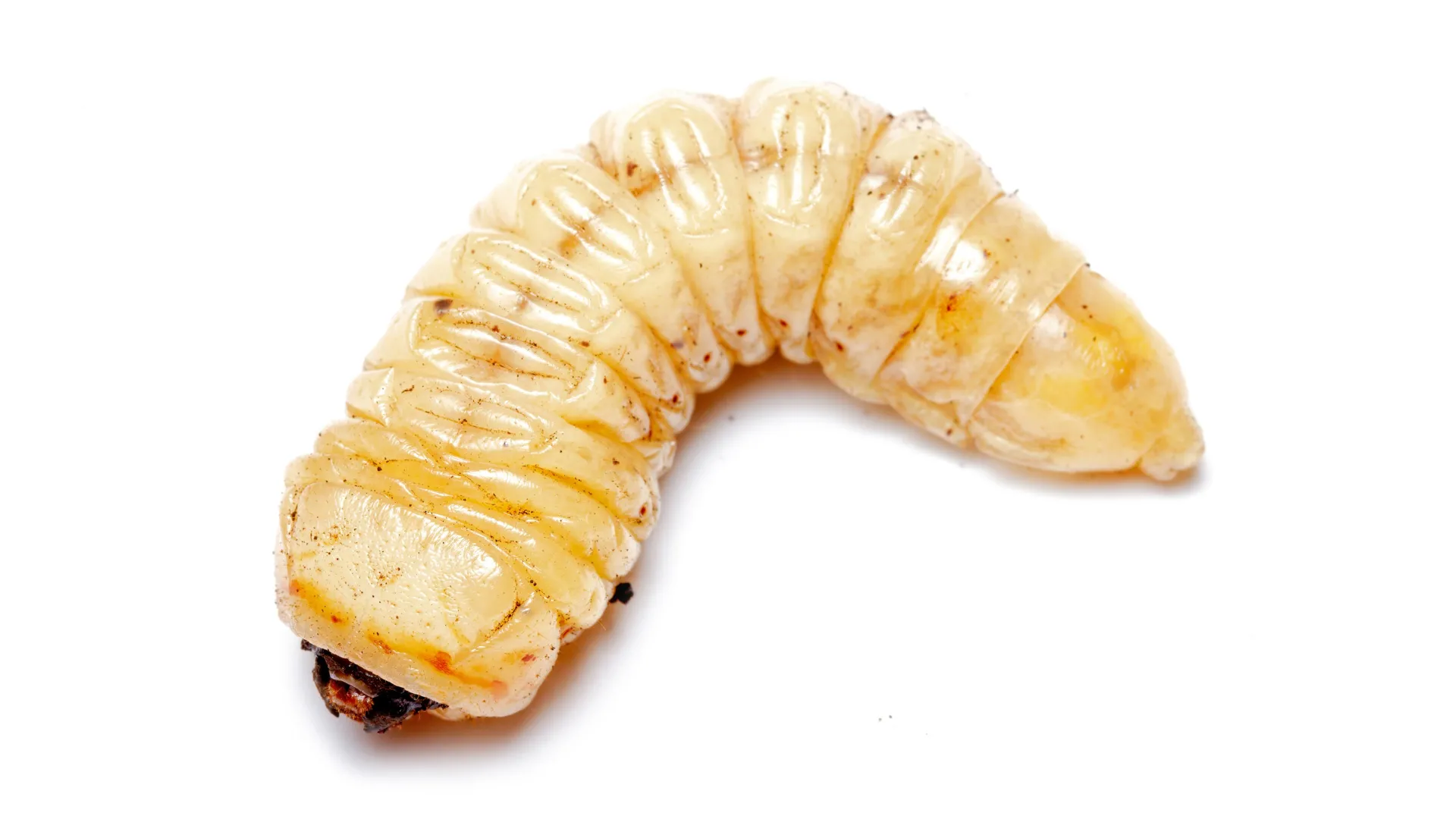
North Carolina blueberry growers are facing a newly identified threat from the longhorn beetle Prionus imbricornis, whose underground larvae feed on plant roots and can kill blueberry bushes. Researchers at North Carolina State University used field surveys and DNA analysis to link the beetle to root damage reported in the state for more than a decade, a finding that could help guide future pest-control efforts.
A decade-old mystery beneath blueberry fields
Prionus imbricornis is a longhorn beetle distinguished by its long antennae. The wood-boring insects are becoming a concern for blueberry growers across North Carolina.
Female beetles typically lay their eggs in soil near the base of hardwood trees. After hatching, the larvae feed on roots and can destroy enough tissue to kill a plant. The larvae can grow to about 5 inches long, while adult beetles do not feed.
North Carolina was the first state to document P. imbricornis attacking blueberry bushes, but signs of a similar problem had been observed for years. Reports of unidentified Prionus larvae damaging blueberry roots date back to 2010. Researchers had struggled to determine which species was responsible.
One challenge was the insects’ underground habitat. The larvae remain close to plant roots, making them difficult to find and study. Larvae from different longhorn beetle species can also look very similar, making identification based on appearance unreliable.
That uncertainty makes it difficult to develop appropriate pest-control strategies, said Kenneth Geisert, a graduate student in North Carolina State University’s College of Agriculture and Life Sciences and the study’s lead author.
“In the past, researchers often simply assumed species,” Geisert said. “If that assumption is wrong, it could mean using treatment strategies that don’t match the problem and incorrectly linking species to their hosts. For example, P. imbricornis longhorn beetles attack roots, while other types of longhorn beetles can attack tree trunks and dead branches. Mismanagement without knowing the species and ecology of target beetles may negatively affect non-target insects.”
DNA analysis identifies the beetle
To identify the insects, the researchers conducted field surveys at six blueberry farms in North Carolina’s Pender, Sampson, Bladen and New Hanover counties.
They installed black panel traps containing sex pheromones, chemical signals that attract adult insects. After collecting the beetles, the researchers used a DNA identification technique known as genetic barcoding to identify the larvae found in the fields.
Genetic barcoding examines short, standardized sections of DNA and compares them with reference sequences from known species. By matching DNA from unidentified larvae with genetic material from adult Prionus beetles, the researchers determined which species were present.
The analysis produced 98% to 99% agreement and confirmed P. imbricornis as the beetle responsible for the root damage.
Few control options are currently available
Identifying the pest represents an important advance, but it also highlights a serious challenge for blueberry growers: no insecticides are currently labeled for controlling this pest in blueberries.
Lorena Lopez, an assistant professor of extension in North Carolina State University’s Department of Entomology and Plant Pathology and a co-author of the study, said the discovery brought both good and worrying news.
“On the one hand, it’s very important to know what species we’re dealing with,” Lopez said. “On the other hand, North Carolina was the first state to ever report it, and it is widespread in blueberries. There are currently no insecticides labeled against this pest of blueberries.”
Lopez has begun testing insecticides to determine which treatments could effectively control the beetles.
A primary focus is identifying the best time to apply treatments. By coordinating insecticide applications with the beetle’s reproductive cycle, researchers hope to disrupt larval development before the insects cause extensive damage to blueberry roots.
If successful, the approach could give farmers a way to protect their crops from a pest that has been difficult to identify and manage for more than a decade.
The findings were published in the Integrated Pest Management Journal in a paper titled “Prionus imbricornis (Coleoptera: Cerambycidae), an emerging pest of blueberries in North Carolina.” Gareth Powell, an assistant professor at North Carolina State University and director of the NCSU Insect Museum, also contributed to the study.
Source: www.sciencedaily.com