


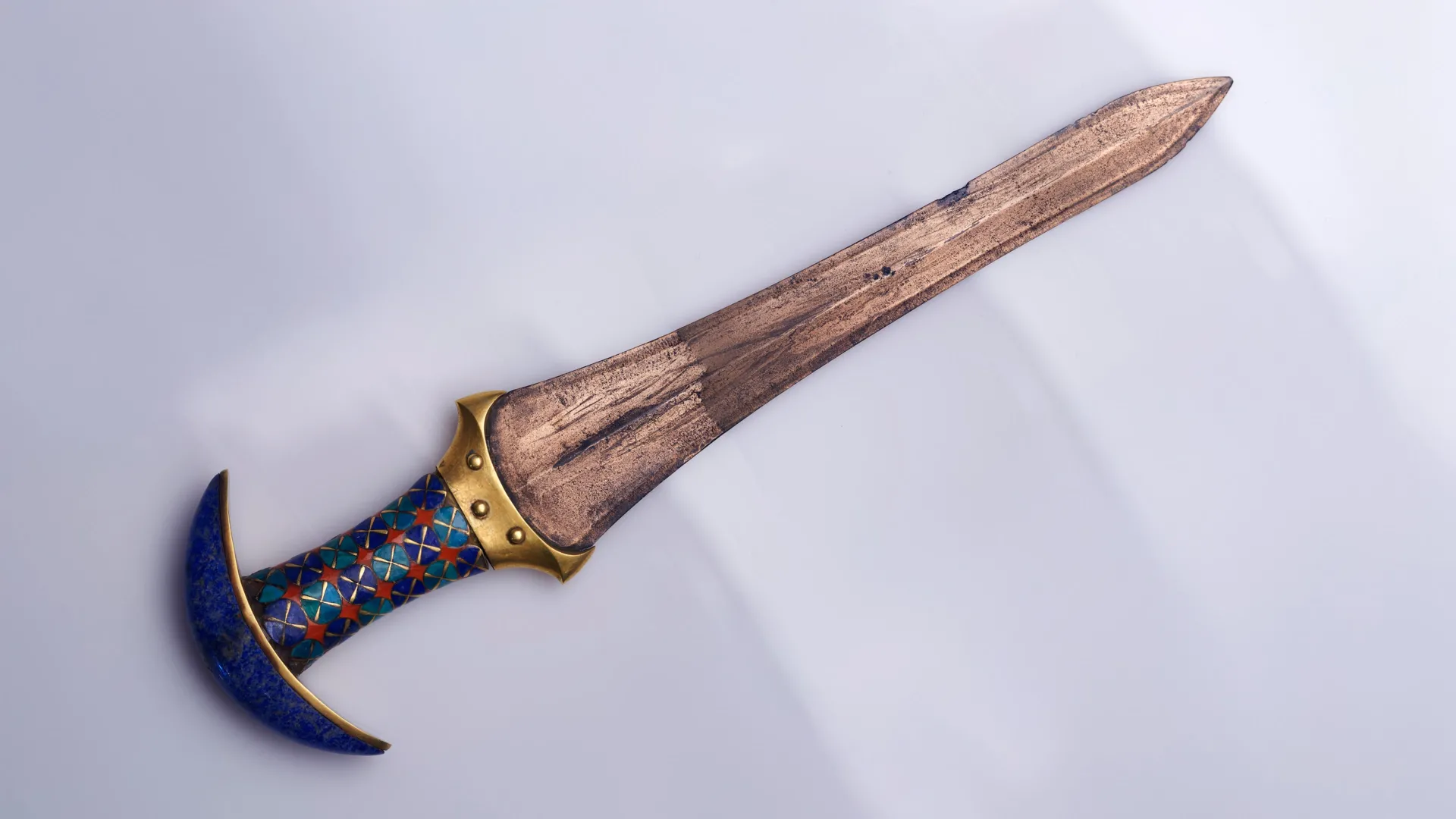
Why were ancient Egyptian princesses buried with bows, arrows, daggers, and maces? Archaeologists have long debated whether these weapons were symbolic burial objects or tools the women actually used. A new study of royal mummies from Egypt’s Middle Kingdom suggests that at least some Egyptian princesses received physical training in archery, hunting, and weapon use.
“Members of the royal family, especially women, actively participated in skilled and physically demanding activities such as archery and hunting,” said Dr. Zeinab Hashesh, lead author of the study published in Frontiers of Environmental Archaeology. “This conclusion is supported by the way their bones developed to withstand intense muscle use, which directly corresponds to the weapons found in their graves.”
Royal Egyptian mummies rediscovered at Dahshur
The research examined six royal mummies originally discovered during the 1890s at Dahshur, an important ancient Egyptian burial complex containing pyramids and shaft tombs. The remains later disappeared from scholarly attention before being rediscovered at the Egyptian Museum during a curation project in 2020.
Four of the six individuals were sisters and daughters of Pharaoh Amenemhat II. They were buried in matching underground chambers. Princess Ita was placed beside Princess Kenmet, while Princess Itaweret shared a tomb with an unidentified woman tentatively identified as Princess Satasolmerit.
The tombs contained objects commonly associated with male burials, including bows and arrows. Princess Ita’s coffin also held an elaborately decorated dagger. Comparable royal weapons were found with two other individuals examined in the study: Princess Nubu-Hotep and King Hor.
All six bodies had been carefully mummified, although their preservation was incomplete. Soft tissue had largely deteriorated, and portions of the skeletons were missing. The skull of one of the princesses, for example, disappeared during the early 20th century.
Even so, enough skeletal material survived in relatively good condition for researchers to estimate the individuals’ ages at death, heights, and biological sex. The bones also preserved evidence of injuries, illnesses, nutritional deficiencies, and other health conditions experienced during their lives.
Skeletal evidence points to archery and weapon training
“Princess Ita was a young woman between 28 and 34 years old. She had strong muscle attachments in her upper body, suggesting that she regularly used weapons such as maces and daggers,” Hashesh said. “Princess Kenmet was between her late 30s and early 40s. Although she showed signs of bone thinning, her ligament attachments were exceptionally strong. Princess Itaweret was between 20 and 34 years old and had survived fractured ribs and a broken leg. Her skeletal structure indicates that she was a skilled archer.”
The sisters’ skeletons displayed unusually pronounced muscle attachments, a pattern associated with repeated and strenuous physical activity. Researchers say these changes closely match the movements needed to handle the weapons placed in their tombs. Similar skeletal evidence indicates that Princess Nubu-Hotep and King Hor may also have practiced archery.
“These individuals showed significant development in their upper limbs, which correlated with repetitive, high-intensity movements such as drawing a bowstring or stabilizing a weapon,” Hashesh explained. “This demonstrates that these movements were habitual throughout life and directly explains the presence of bows, arrows, and maces in the women’s graves. These objects were not merely symbolic gifts; they were tools actively used by women.”
The findings suggest that weapon training was a long-term part of life for some members of Egypt’s royal family. The bone changes indicate repeated practice involving demanding actions, including pulling a bowstring, controlling a weapon, and maintaining upper-body strength.
Injuries reveal a physically demanding royal lifestyle
Several of the individuals also showed evidence of trauma, infection, and nutritional deficiencies. Princess Itaweret had healed fractures to her ribs, possibly caused by a blow or a fall from a height, as well as a broken leg.
The sisters also shared rare spinal abnormalities. Researchers say this pattern may indicate close biological relationships among their parents and the wider royal family.
“These injuries were most likely caused by accidents, falls, impacts, or other trauma associated with an active lifestyle, including hunting, military training, or similarly demanding activities,” Hashesh said. “Importantly, the injuries healed successfully, suggesting that these royal women received advanced medical care for their time.”
The successful healing of these wounds offers another insight into life among ancient Egyptian royalty. Despite suffering serious physical injuries, the princesses appear to have received medical treatment that allowed them to recover.
Reconstructing the lives of ancient Egyptian royal women
Researchers acknowledge that the surviving remains impose important limits on the study. The loss of the princesses’ skulls restricts the types of analyses that can be performed, and the research team has not yet completed every investigation it hopes to conduct.
One planned method is stable isotope analysis, which could reveal more about the women’s diets and help researchers investigate signs of nutritional deficiencies.
“Our goal is to go far beyond simply identifying the royal family of Dahshur,” Hashesh said. “We want to reconstruct as much as possible about their lives, families, health, and even their political roles. Beyond the scientific work, we preserve the remains, create 3D prints for educational and virtual exhibitions, and display them alongside jewelry, weapons, and other grave goods. This is done respectfully, ensuring that the remains are presented as ethically as possible.”
“Their objects and jewelry are fascinating, and their craftsmanship is breathtaking. Archaeologists have traditionally focused on preserving these treasures, but the people themselves have often been overlooked. Our research aims to change that by placing the lives of ancient Egyptian royal women at the center of the story.”
Source: www.sciencedaily.com