


Nature Briefing: Fake Academic Awards, Outsourced Peer Review and the Hidden Risks of AI
Hello Nature readers. Would you like to receive this briefing free in your inbox every day? Sign up here.
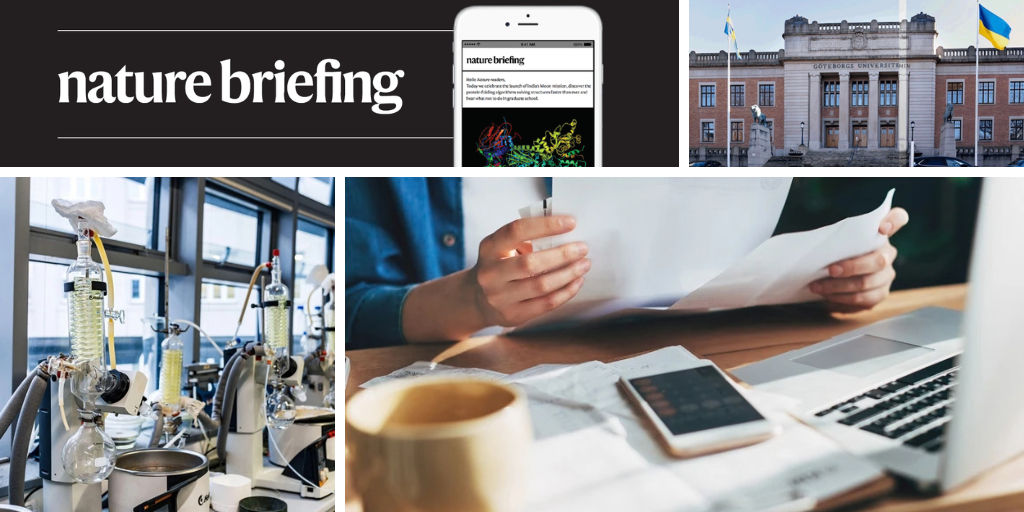
The website of the European Academy of Engineering features a doctored image of a University of Gothenburg building. (Johan Wingborg; digitally enhanced image taken from Google Maps)
Fake academic academy allegedly targeted scientists and universities
“I don’t have a single moment that is my proudest,” says computer scientist Moshe Vardi. He had to ask his institution to retract a press release about what he believed was a prestigious award from the National Academy of Artificial Intelligence, which he received alongside two heroes of the scientific world.
The “academy” turned out to be fake. A Nature investigation has revealed that it was part of a vast international network of suspicious societies that allegedly defrauded leading scientists and universities around the world. Fan Xiudi, who studies academic rigour in China, said the ultimate goal appears to be selling memberships and awards to early-career researchers.
Nature | 12-minute read
News
Academic journals are outsourcing peer review to third-party companies
Some academic journals are outsourcing peer review to third-party companies and paying reviewers for their work, according to a new study. The analysis found that these companies advertise publicly and conduct background checks on applicants to assess their suitability for peer review. However, they do not disclose which journals use their services.
“This lack of transparency is concerning” when journals use third parties for peer review without disclosure, said social scientist and study co-author Amna Potaras.
Nature | 5-minute read
Reference: MetaArXiv preprint (not peer reviewed)
Chemical research still relies heavily on hazardous solvents
Despite a 30-year effort to make chemical research more sustainable, the field remains heavily reliant on harmful solvents. An analysis of 1.3 million chemical reactions described in patents found that about 70% of reactions used hazardous solvents in 2016, up from 60% in 1976.
The findings should be a wake-up call, particularly for chemists using artificial intelligence to plan reactions. AI models trained on previously reported methods could reproduce past solvent choices, even when greener alternatives are available.
Nature | 5-minute read
Reference: Angewandte Chemie paper
New English-language journal aims to compete with established academic titles
A new English-language journal, Vita, aims to rival some of the oldest and most influential academic titles in the world. One part of its appeal is that it is free for authors and readers.
“But for it to be a global leader, it has to attract international scholars, and it’s unclear whether it can do that,” says Ning Zhang, founder of a US company that helps Chinese academic journals build a global presence. Vita’s funders are willing to cover publication costs for researchers outside China.
Nature | 6-minute read
Features and analysis
Why youth vaping is linked to mental-health concerns and later smoking
Electronic-cigarette use is increasing, but vaping poses serious health risks for children, say two doctor-scientists who co-authored a new review and have seen its effects in their medical practices.
“We were surprised by the extent to which youth e-cigarette consumption was associated with poorer mental health,” they write. The most worrying finding, they say, was that e-cigarettes increased the likelihood that children would eventually take up traditional smoking.
Educators and regulators can use this evidence to adjust their approaches. Sweet flavours and colourful packaging are obvious targets.
Nature | 15-minute read
Reference: Archives of Disease in Childhood review
Timnit Gebru challenges apocalyptic AI warnings
When leaders of AI companies make apocalyptic claims about the dangers of their products, they may be using the narrative to signal that their technology is powerful, disclaim liability for potential damage and distract regulators, says researcher Timnit Gebru, the former co-leader of Google’s AI ethics team.
“If I’m talking about things that could wipe out humanity, like pollution and data centres, that sounds kind of like small potatoes, right?” she says. “Are you talking about copyright protection for artists and actual lawsuits that are going on right now? Governments shouldn’t be wasting their time thinking about things like this.”
Read more: Artificial intelligence could kill us all, as research leaders warn — Nature examines whether this technology could truly bring about the end of humanity. (Nature | 7-minute read)
One more thing
I’m thinking of breaking my piggy bank to buy this today: A home fit for an astronomer queen in London.
For £18 million, you could watch the next transit of Venus from a purpose-built observatory built for King George III in 1769. The property also includes an ornamental lake.
While I’m considering making my forever home completely surrounded by a golf course, I’d love to hear what you think of this newsletter. You can email us at [email protected].
Source: www.nature.com