


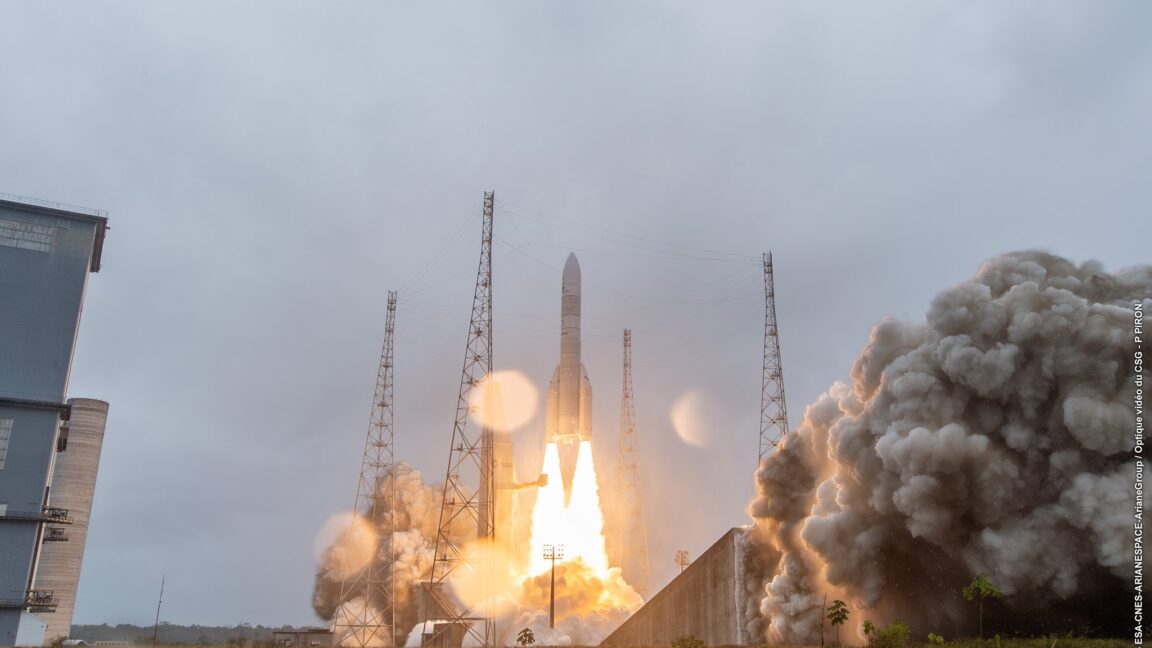
Ariane 6 subsidies could cost European taxpayers more than €100 million per launch
Although the Ariane 6 program may appear to be a commercial success, Europe is likely absorbing significant losses on each civilian launch mission through government subsidies.
Europe has invested approximately €3.6 billion in developing the Ariane 6 rocket and its launch facilities in French Guiana. However, that investment represents only part of the program’s total cost. Josef Aschbacher, Director General of the European Space Agency, confirmed that European governments would still need to provide between €32 million and €38 million in subsidies for every Ariane 6 launch, assuming the rocket flies nine times per year.
When development expenses are combined with ongoing launch subsidies, European taxpayers could be contributing more than €100 million per Ariane 6 mission before customers pay anything to launch operator Arianespace.
Europe currently aims to launch nine or 10 Ariane 6 rockets annually. However, rising global demand for satellite launches and limited launch capacity have prompted discussions about increasing Ariane 6 production and flight rates.
Will European ministers accelerate Ariane 6 production?
Aschbacher said in June that Europe was on track to support 10 Ariane 6 launches next year, meeting the target established by Arianespace. He also said the European Space Agency was evaluating options to expand annual launch capacity to 12, 15, or even 20 missions.
Because Ariane 6 is an expendable rocket, increasing the launch rate would require Europe to manufacture more of every major component. This includes the solid rocket motors, first-stage engines, upper stages, and payload fairings.
Aschbacher said he wanted European ministers to provide “clarification” by the end of the year on whether they planned to expand Ariane 6 production. The decision could be challenging because higher production rates would require additional investment in factories, supply chains, and launch infrastructure.
European policymakers must also determine whether expanding Ariane 6 is financially justified if the program depends on substantial subsidies to attract commercial customers. While demand for launch services is growing, government support could make it difficult for the rocket to compete on price with reusable launch vehicles developed in the United States and China.
Ministers may instead conclude that the available funding would be better invested in the next generation of Ariane rockets. Future European launch vehicles could incorporate at least partial reusability, helping them reduce operating costs and compete more effectively in the global launch market.
When European ministers decide later this year whether to expand Ariane 6 production, their decision will offer an important indication of how they view the rocket’s long-term future.
Source: arstechnica.com