


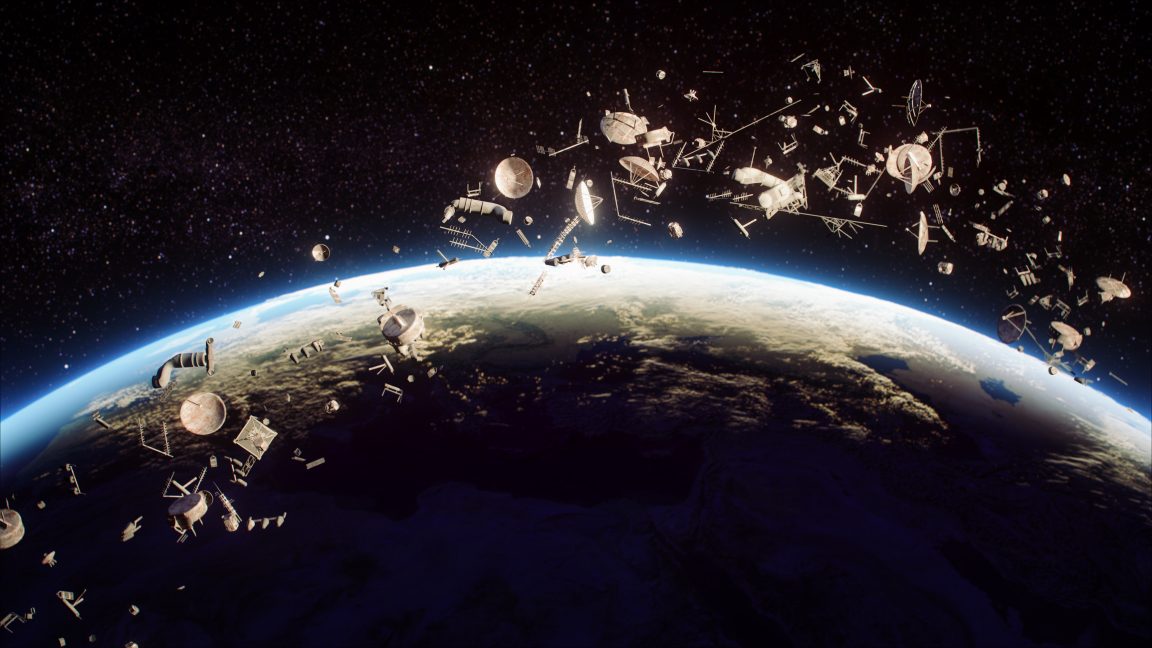
Kessler Syndrome Explained: How Space Debris Could Threaten Earth’s Orbit
SpaceX’s Starlink constellation is not operating in isolation. As Starlink and similar satellite networks expand, the growing number of objects in orbit is raising serious concerns about space debris and the long-term safety of Earth’s orbital environment.
What Is Kessler Syndrome?
Some trusted experts say Kessler syndrome is not an imminent possibility. A single collision would not automatically trigger a catastrophic chain reaction. However, repeated impacts could create increasingly large debris fields that make certain orbital regions difficult or even dangerous to use.
Space is becoming increasingly crowded, particularly in orbits between 520 and 1,000 kilometers above Earth. According to a 2025 paper by Hugh Lewis and Kessler, some orbital zones in this region have already reached what is known as the “runaway collision threshold.”
This means that a major impact could generate new debris faster than gravity can naturally pull it into Earth’s atmosphere. Over time, that debris could increase the likelihood of additional collisions.
Why Are Old Rocket Stages a Space Debris Risk?
Another concern is the growing population of spent rocket bodies. These upper stages were not always properly disposed of after launch, and some launches today still lack enough propellant to safely deorbit their second or third stages.
These school-bus-sized rocket stages are especially problematic at altitudes of approximately 840 and 975 kilometers. As space debris expert Darren McKnight told Scientific American, such objects can remain uncontrolled in orbit for decades or even centuries. The higher the altitude, the longer debris is likely to remain in space.
Could Anti-Satellite Weapons Trigger Kessler Syndrome?
With so many objects moving through low Earth orbit, intentionally destroying satellites could create dangerous debris fields. Anti-satellite missile tests or attacks could disrupt communications, damage other spacecraft and cause significant economic harm.
If humans begin deliberately destroying satellites in space, the risk of a Kessler syndrome-type event would increase substantially. Iran’s recent achievement of becoming the ninth country to place an indigenous satellite into orbit also highlights the growing number of nations capable of operating in space.
What Would Kessler Syndrome Mean for Spaceflight?
In the short term, it is unlikely that space will become completely unusable. However, operating in orbit could become increasingly expensive because of the need for collision-avoidance maneuvers, additional personnel and extra propellant.
Finding safe launch windows could also become more difficult as spacecraft must avoid an expanding number of known debris objects.
Over the longer term—possibly as soon as 15 years from now, or later—Kessler syndrome-type outcomes may become increasingly plausible. The immediate challenge is to manage the rapid growth of satellites, rocket bodies and other debris before collisions make Earth’s orbit significantly harder to use.
Source: arstechnica.com