


Elephants May Use Medicinal Plants to Treat Themselves and Their Calves, Study Finds
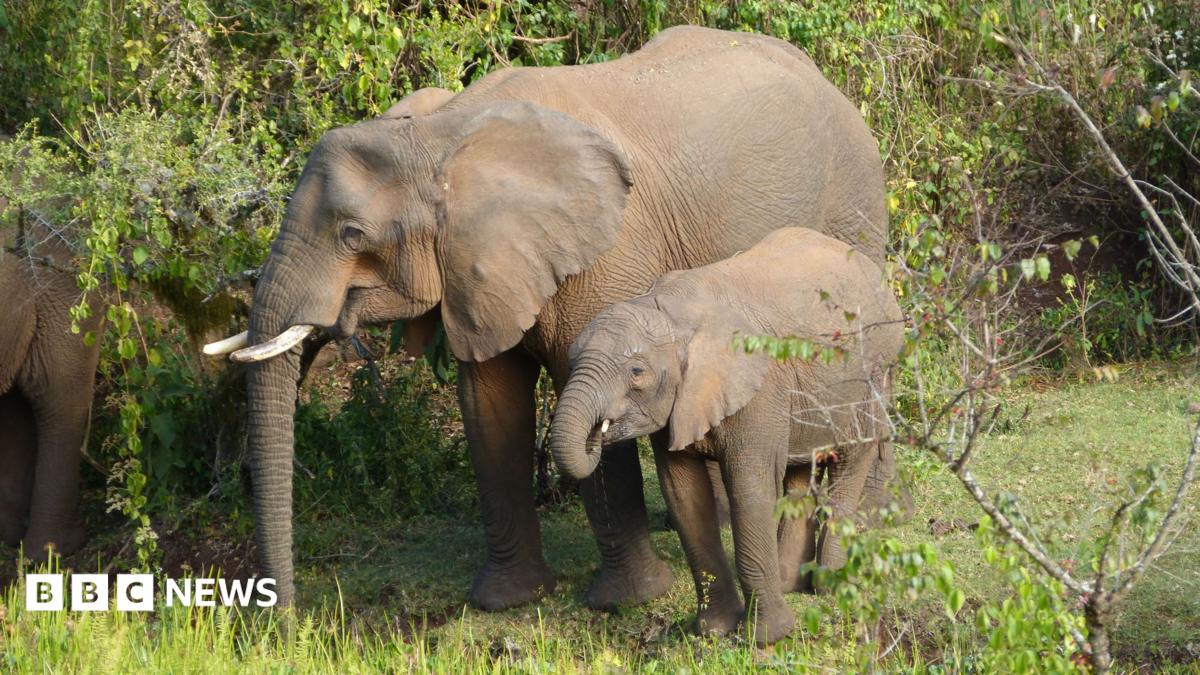
Scientists working with conservation charities have documented evidence suggesting that elephants may use medicinal plants when they or their calves are unwell.
The researchers interviewed local people, including wildlife scouts and elders. Their findings indicate that elephants use 35 different plants, 25 of which are locally recognised for medicinal purposes.
Elephants reportedly give medicinal plants to their young
Local testimonies revealed several details about how elephants may use plants as medicine. In one account, a wildlife scout said he witnessed elephants using a plant known as anger wheat “as a medicine to feed their babies.”
Anger wheat is used locally to treat illnesses such as abdominal pain. The scout said he saw a mother elephant remove the leaves and chew them with tree roots until the mixture was smooth.
He also reported seeing mothers mix the plant material with their own milk.
“They give it to the baby, but the baby chews on it himself and spits out the solids.”
Professor Michael Huffman, a Japan-based primatologist now at Nagasaki University, described the account as “intriguing”. However, he said more evidence was needed to prove that the elephant was providing tailored treatment to its calf.
Researchers are using cameras to study elephant self-medication
The study, published in Scientific Reports, did not identify the interviewees. Participants remained anonymous so they could share their experiences freely.
Scientists have begun collecting further evidence and have told local wildlife experts that cameras have been used to record the behaviour they observed.
Researchers are also analysing plants used by elephants to look for potentially new medicines that the animals may have discovered themselves.
The scientists collaborated with conservation charities, including the Mount Elgon Foundation, during the research.
Dr Fabian Schulz, the project’s other principal investigator at the Bernhard Nocht Institute for Tropical Medicine in Hamburg, told BBC News:
“Local knowledge gave us the map.”
The team wants to track elephants to find out whether they choose particular plants in specific health situations and whether those plants have biological activities that could explain their use.
Source: www.bbc.co.uk