


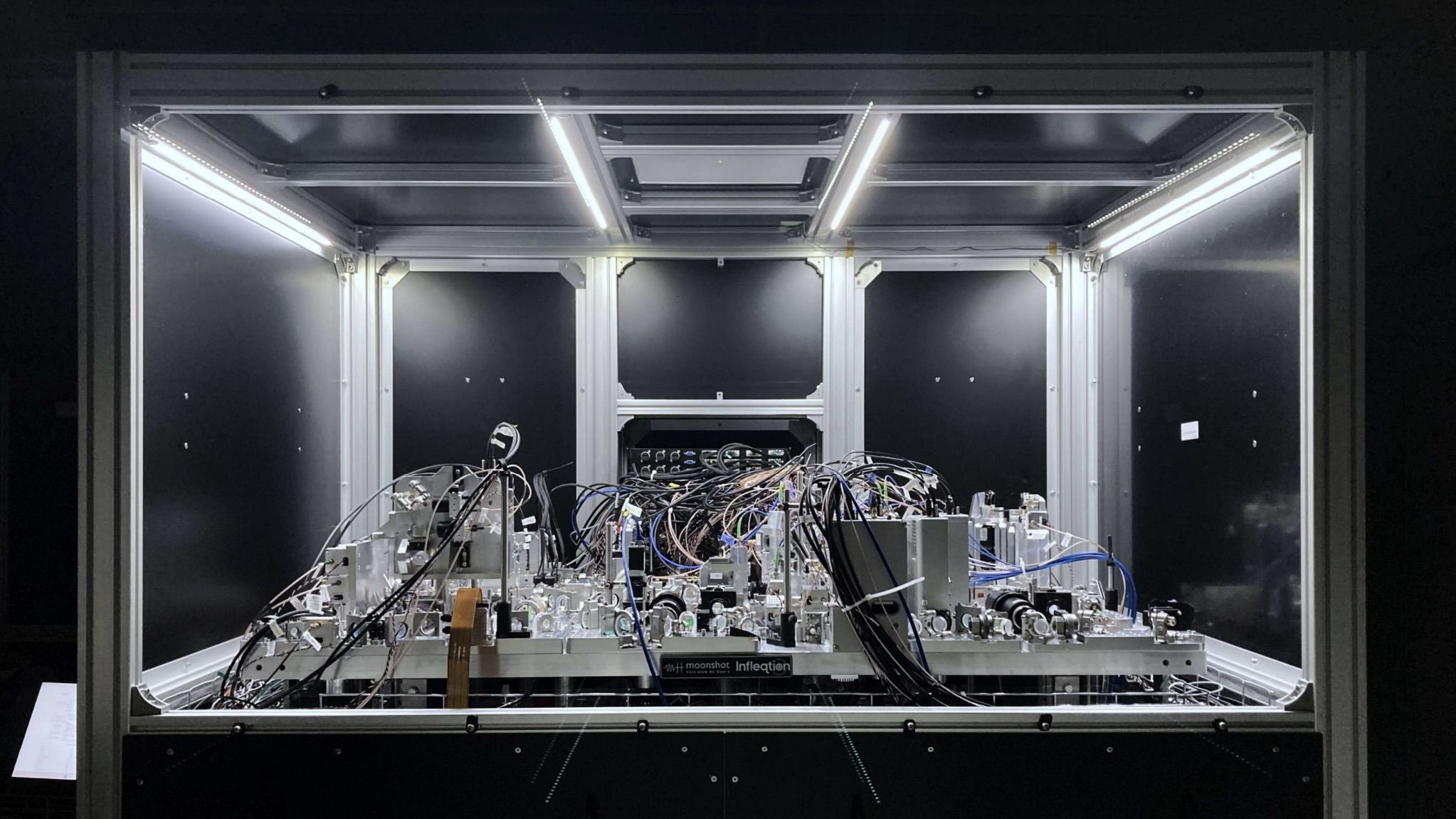
Japan Turns On Shunkai, Its First Full-Stack Neutral-Atom Quantum Computer
Researchers plan to scale the system from about 50 qubits to 10,000 physical qubits by March 2031.
Japanese researchers have begun operating Shunkai, the country’s first full-stack neutral-atom quantum computer. The system includes the hardware, controls and software needed to accept user input and return results, making it easier for researchers to develop and run practical quantum applications.
The team plans to make Shunkai available to external users over the next few years. Researchers also hope to integrate it into an existing shared supercomputing facility, creating a hybrid quantum-GPU computing center.
In a statement, project leader Kenji Omori, a professor of photomolecular science at the Institute for Molecular Science, said research using Shunkai “will have ripple effects in various fields in industry, academia, and government around the world.”
Why quantum computers are powerful but difficult to use
Unlike conventional computers, quantum computers operate according to the laws of quantum physics. Their basic units of information, called qubits, can be built using superconducting circuits, trapped ions, photons and other systems.
A qubit can represent 0, 1 or a quantum superposition of both states. Qubits can also become entangled, creating a connection in which information is shared between particles.
However, qubits are notoriously fragile. Even slight environmental interference can destabilize or destroy the information they contain. Qubit operations are estimated to have an error rate of about 1 in 1,000, compared with approximately 1 in a billion or even 1 in a trillion for operations involving classical computer bits.
That is why researchers are working on quantum error correction. The approach uses redundancy to encode information, helping protect computations from the small errors that naturally occur in quantum systems.
The broader goal is to create higher-quality qubits and scale quantum computers until they can compete with the world’s fastest supercomputers. Achieving that goal requires increasingly sophisticated systems, including cooling equipment that makes many quantum computers impractical outside highly controlled laboratory environments.
How Shunkai uses neutral atoms as qubits
Shunkai is named after Harumi Shibukawa, a Japanese astronomer who lived in the 17th century.
Instead of using supercooled superconducting circuits, Shunkai uses neutral atoms as qubits. The atoms are captured and levitated with highly focused laser beams called optical tweezers.
The lasers hold the atoms inside a vacuum chamber. Microwaves or laser light then manipulate the atoms’ quantum states to perform calculations. A camera reads the results by observing fluorescence from individual atoms.
Neutral-atom systems can operate without the same type of extreme cooling required by superconducting circuits. Their qubits can also be rearranged and fine-tuned during a calculation, allowing researchers to control which qubits interact with one another.
This flexibility could help address two major challenges in quantum computing: scaling systems to large numbers of qubits and correcting the errors that inevitably arise during quantum calculations.
Shunkai’s path to 10,000 qubits
Shunkai will initially operate with about 50 qubits, with plans to expand to approximately 500 qubits later. By March 2031, the research team aims to create a “large-scale, high-performance neutral atom fault-tolerant quantum computer” with 10,000 physical qubits and quantum error detection and correction capabilities.
The system will be partially open to external researchers, who will be able to develop applications and test and improve Shunkai’s quantum error-correction capabilities, according to representatives of Japan’s National Institutes of Natural Sciences.
Neutral-atom quantum computers have attracted growing attention worldwide because they may overcome some of the limitations associated with superconducting systems.
“I think it is very significant that we have now developed Japan’s first full-stack quantum computer using this cutting-edge method and started operating it,” Omori said.
Can you match these ancient devices to their photos? Find out with our calculation quiz.
Source: www.livescience.com