


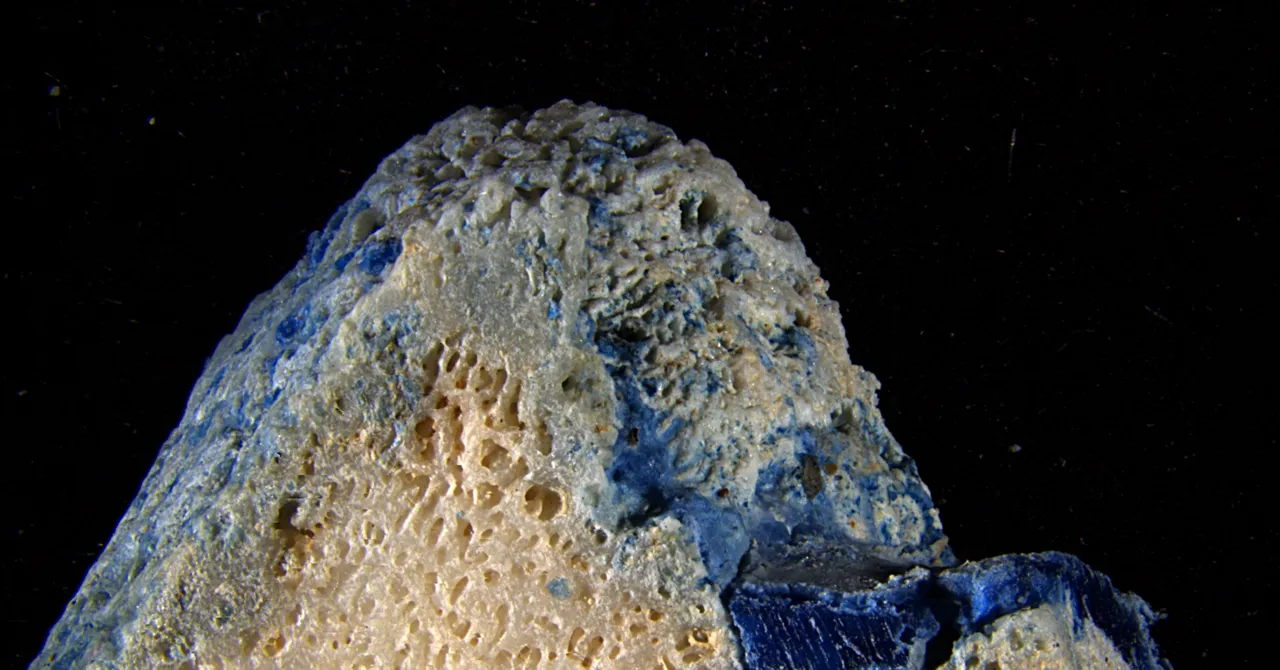
“Plastic Coral”: Scientists Discover Plastic Fused With Coral Debris
Ocean plastic pollution is widespread. Plastic waste has been found in marine ecosystems ranging from beaches and coral reefs to the deepest parts of the ocean. Although precise measurements are difficult, scientists estimate that millions of tons of plastic may lie on the ocean floor.
Plastic Waste Has Been Found Inside Coral Skeletons
Scientists have documented marine animals becoming entangled in or consuming plastic debris for more than half a century. Some researchers have even proposed the term “plastocene” for the geological period beginning in the 1950s.
Now, researchers have identified another way plastic is polluting the environment: by fusing with coral debris. The discovery, described in a new study, has been dubbed “plastic coral.”
The complex was discovered during a survey of the Ryukyu Islands, south of Japan. Scientists noticed tiny, brightly colored spots embedded in white coral gravel along the coast. They collected samples from three beaches on Okinawa’s main island and analyzed them in the laboratory.
Spectroscopic analysis revealed polymers derived from common household plastics. Micro-CT scans confirmed that the polymer had dissolved into microscopic pores in the coral skeleton fragments, making the plastic and coral so thoroughly integrated that they could no longer be separated.
How “Plastic Coral” Forms
Plastic has previously been found entangled with elements of the natural environment, but those cases have generally involved inanimate objects such as rocks. In 2019, another research group identified a thin layer of degraded plastic coating shellfish and large algae in a tidal pool. They called the phenomenon “plastic skin.”
However, the new study marks the first reported observation of plastic fused with coral.
Why Coral Debris Matters to Reef Ecosystems
Although the coral debris is no longer living after washing ashore, it can later return to the ocean and continue to play an important role in coral reef ecosystems. Coral fragments form stable surfaces where new corals can colonize, while their irregular shapes provide hiding places for small marine animals seeking protection from strong currents and predators.
It remains unclear how plastic coral affects other corals. Previous research has shown that some chemicals leached from common plastics can inhibit coral reproduction. Other studies have found that plastic debris can transport pathogens to corals.
Did Beach Bonfires Melt the Plastic?
Scientists are still investigating how the plastic fused with the coral. Ocean temperatures are rising, but they are not yet high enough to melt plastic. Ultraviolet radiation may have contributed to the process, but the researchers believe beach bonfires are a likely cause.
Source: www.wired.com