


A human challenge study involving 45 people exposed to a modified, mild strain of dengue virus is helping researchers investigate why a second infection can cause more severe disease. By comparing blood and lymph-node samples from participants with different histories of dengue infection, the researchers are examining how the immune system responds to the virus and how that knowledge might improve vaccines.
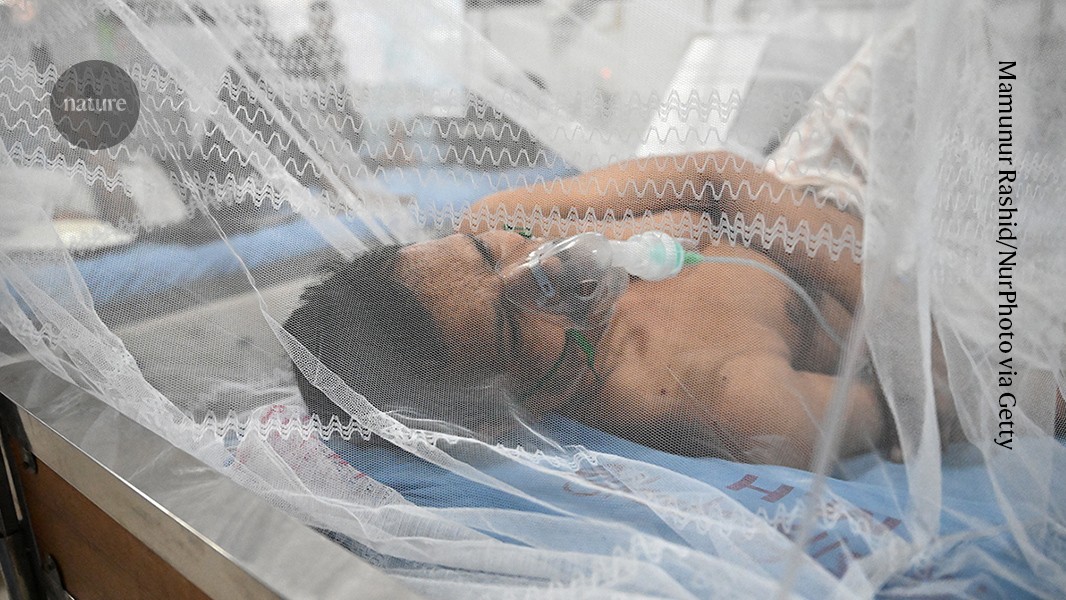
People infected with dengue virus for a second time often develop severe symptoms. Credit: Mamunur Rashid/NurPhoto via Getty
Dengue fever is transmitted by the bite of an infected female Aedes mosquito. The viral disease kills approximately 40,000 people each year and infects up to 400 million people annually. Countries including Bangladesh and Kenya are battling deadly outbreaks.
Although most adults survive a first infection, they can develop more severe symptoms after being exposed to a different dengue strain a second time. This unusual pattern has complicated efforts to develop dengue vaccines.
The human challenge study, published in Science Translational Medicine on October 281, is beginning to reveal the immunological basis of this heightened risk during a subsequent infection.
Understanding the biology behind dengue transmission patterns could help researchers develop better vaccines, said study co-author Leah Katzelnick, an epidemiologist at the National Institute of Allergy and Infectious Diseases in Bethesda, Maryland.
“Dengue fever is still considered a neglected tropical disease,” she says. “But it’s now a problem for almost everyone.”
Existing vaccines add to the challenge because immunization can also affect the risk of severe disease during a subsequent infection. Concerns were raised in the Philippines after a large-scale public immunization effort began there in 2016, when some children contracted severe dengue infections.
Dangerous immune memory
It is unclear why secondary infections can be more severe. One theory is that, when the immune system encounters a different dengue strain, it deploys antibodies originally produced against a strain encountered previously. Those antibodies may be less effective against the new strain, potentially worsening symptoms. A subsequent infection with another dengue variant does not appear to produce the same immune response.
To investigate dengue immunology, Katzelnick and her colleagues recruited 45 healthy people and divided them into three groups according to their previous exposure to dengue strains. Some participants had been infected with one particular strain, while others had been infected with several strains. The researchers then exposed all participants to a weakened version of DENV-3, one of the virus’s four strains, and compared their immune responses using blood and lymph-node samples.
Source: www.nature.com