


Close Menu
HitechubHitechub
    What's Hot
    Science

    NASA Unveils Astronauts for Artemis III Mission to Test Innovative Lunar Lander

    Science

    Where is the anti-universe where time flows backwards?

    Science

    How Increasing Individualism is Impacting Modern Love Lives

    Important Pages:
    • About Us
    • Privacy Policy
    • Terms & Conditions
    Facebook X (Twitter) Instagram Pinterest
    Facebook X (Twitter) Instagram
    HitechubHitechub
    Thursday, June 11
    • Technology
      1. AI
      2. Gadgets
      3. View All

      This is the most popular CEO in the world

      Sectors in which “Chat-GPT” is most often used

      AI Pioneer Expresses Concern About Potential for AI to Surpass Humanity

      Artificial intelligence has begun to “swallow” professions

      What’s new in Android 14

      Europeans have about 700 million old mobile phones in their drawers

      Here’s how you can tell if your phone is being tapped

      “Sneaker X” – computer case in the shape of a sneaker

      Russian Gamers Unite to Prevent Nuclear War: Join the Fight Online

      Challenges of Space Travel: Why Journeying to Space is So Difficult

      NASA Astronaut Casts Historic Vote from Space

      Discover the Future of Comfort: What If You Could Wear a Chair?

    • Science
      1. Space
      2. Wheels
      3. View All

      Galaxies in the universe are growing more slowly than they should

      “Espace” presented the new lander “Apex 1.0”

      The largest asteroid sample ever collected has arrived on Earth

      (VIDEO) Incredible flight of the Parker Solar Probe

      Toyota wants to make a new generation battery with a range of up to 1,200 km

      Meet Toyota’s lunar “baby” that could make exploring the Moon easier

      Microlino – Is this the perfect city car?

      Alfa Romeo 4C gets an electric successor

      Discoveries of Millions of Fossilized Whale Bones Unearthed in Deep Sea ‘Graveyard’

      NASA Responds to Criticism Over All-Male Astronaut Crew for Artemis III Mission

      Rare Camera Trap Footage Reveals Wolves Hunting European Bison

      Uncovering Surprising Foods That Cause Weight Gain: What You Didn’t Expect

    HitechubHitechub
    Home » How Aliens Make First Contact with Humans: Unraveling the Truth
    Science

    How Aliens Make First Contact with Humans: Unraveling the Truth

    Share Facebook Twitter Pinterest WhatsApp
    Share
    Facebook Twitter LinkedIn Pinterest WhatsApp

    In 2063, the innovative scientist Zefram Cochrane successfully conducts the groundbreaking first test flight of a wis

    p warp engine, opening the door to the astonishing concept of faster-than-light travel.

    Signs of this warp technology were detected by a nearby Vulcan ship, leading the crew to conclude that humanity had finally reached the level of maturity necessary for first contact. This pivotal moment is at the heart of the Star Trek universe, revealing the existence of extraterrestrial life.

    “I don’t think you can rule out such a scenario,” remarks Professor Michael Garrett, the Director of the Jodrell Bank Astrophysics Center and the current Chairman of the Standing Committee of the International Astronautical Association for Extraterrestrial Intelligence Exploration (IAA SETI).

    “Alien civilizations could be much more advanced than ours,” he adds. “They could very well be concealed.”

    According to Garrett, our understanding of extraterrestrial intelligence will more likely come from observatories detecting signals than from an unexpected arrival of alien spacecraft.

    In such a scenario, organizations involved in SETI have established their own first contact protocols.

    “The initial step involves verifying the signal through an independent observatory,” Garrett explains. “The discovery should remain confidential until it is rigorously verified.”

    Following this, the discoverer’s government and the United Nations should be informed, leading to a public announcement shortly thereafter—ideally speaking.

    “There is some skepticism regarding the actual adoption of this protocol,” Garrett notes.

    “If a signal is rich in information, its impact would likely outweigh that of a mere indication of an intelligent civilization.

    “The significance would be quickly recognized by governments. Scientists may feel the need to protect themselves amidst this discovery.

    “What is documented in the protocol may not reflect the actual events.”


    Depending on the specifics of the alien signal and our capacity to comprehend or translate it, the question arises: will we respond?

    “It’s extremely challenging to prevent individuals from sending signals into space,” Garrett explains. “If a markedly advanced civilization were to exist, it might not take long for them to send out detectable signals.”

    “There are undoubtedly small groups of enthusiasts trans­mitting signals, but which organizations, individuals, or nations possess the authority to transmit messages on behalf of the entire planet?

    “This is why the UN’s involvement is crucial, yet presently, the UN lacks an official position on this matter.”

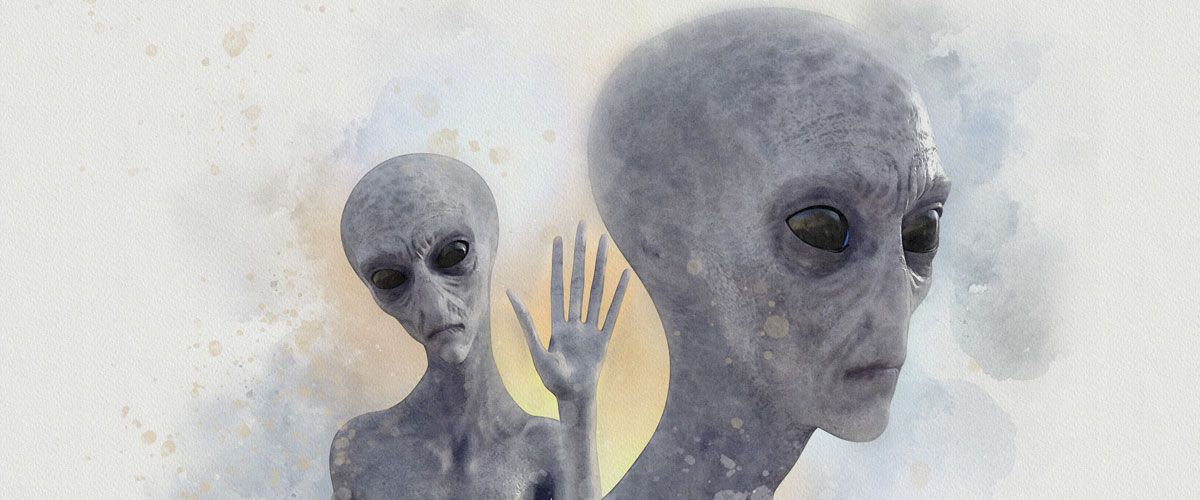
    Signals from intelligent extraterrestrial life are more likely to be received by observatories than spacecraft. Photo credit: Getty

    In Star Trek, the revelation that we are not alone in the universe and that intelligent life exists beyond our planet sparks a significant transformation in humanity’s self-perception.

    Humanity becomes more enlightened, more unified, and ultimately driven by exploration rather than conflict or greed. However, it remains uncertain whether we will respond similarly.

    “Much hinges on the distance,” Garrett reflects. “If aliens were located within our solar system, concern would likely prevail. Conversely, if they resided on the other side of the galaxy, excitement would likely ensue.”

    “Some religious institutions may need to revise their doctrines, but most religions tend to manage challenges effectively as they arise.

    “I am hopeful that the discovery of another civilization would accelerate our political evolution, ethics, and morality.”

    “That’s the brilliance of Star Trek—it provides us with a vision to aspire to.”

    Source: www.sciencefocus.com

    Share. Facebook Twitter Pinterest LinkedIn WhatsApp
    Previous ArticleViral Injections Show Promising Results in Halting Pancreatic Cancer Progression in Three Patients
    Next Article How Robots Are Set to Replace Armed Soldiers as Decision Makers in Warfare

    Related Posts

    Science

    Discoveries of Millions of Fossilized Whale Bones Unearthed in Deep Sea ‘Graveyard’

    Science

    NASA Responds to Criticism Over All-Male Astronaut Crew for Artemis III Mission

    Science

    Rare Camera Trap Footage Reveals Wolves Hunting European Bison

    Science

    Uncovering Surprising Foods That Cause Weight Gain: What You Didn’t Expect

    Science

    Moon Meteorite Holds Key Evidence of Massive Asteroid Impact

    Science

    Discover How Millions of Planets Could Form Around Supermassive Black Holes

    Science

    Unlocking Sloth’s Slow Lifestyle: The Ancient ‘Jumping Gene’ Explained

    Science

    Rapid Melting of Glaciers on the Roof of the World: Causes and Impacts

    Add A Comment
    Leave A Reply Cancel Reply

    Stay In Touch
    • Facebook
    • Twitter
    • Instagram
    • Pinterest
    Top Picks
    Science

    The Largest Earthquake in History: A Dive into the Richter Scale’s Ultimate Record

    Developed by seismologist Dr. Charles Richter in 1935, the Richter Scale provides a standardized numerical…

    The first factory for humanoid robots opens in the United States

    Revealed: New Insights into How the Pyramids Were Constructed

    Eyelash Trimming for Men: The Rising Trend That’s Confusing Ophthalmologists

    Discovering the True Motivation Behind America’s Return to the Moon

    Most Popular
    Technology

    This is the northernmost photovoltaic plant in the world

    Science

    Experience Incredible Speeds as You Move Through Space

    Categories
    • AI (13)
    • Gadgets (10)
    • Science (177)
    • Space (9)
    • Technology (37)
    • Wheels (9)
    Our Picks
    Science

    Unveiling the Truth: Why Your Memories May Not Be Accurate

    Wheels

    Toyota wants to make a new generation battery with a range of up to 1,200 km

    © 2026 Hitechub.
    • Home
    • About Us
    • Privacy Policy
    • Terms & Conditions

    Type above and press Enter to search. Press Esc to cancel.

    We are using cookies to give you the best experience on our website.

    You can find out more about which cookies we are using or switch them off in .

    Ad Blocker Enabled!
    Ad Blocker Enabled!
    Our website is made possible by displaying online advertisements to our visitors. Please support us by disabling your Ad Blocker.
    Hitechub
    Powered by  GDPR Cookie Compliance
    Privacy Overview

    This website uses cookies so that we can provide you with the best user experience possible. Cookie information is stored in your browser and performs functions such as recognising you when you return to our website and helping our team to understand which sections of the website you find most interesting and useful.

    Strictly Necessary Cookies

    Strictly Necessary Cookie should be enabled at all times so that we can save your preferences for cookie settings.