


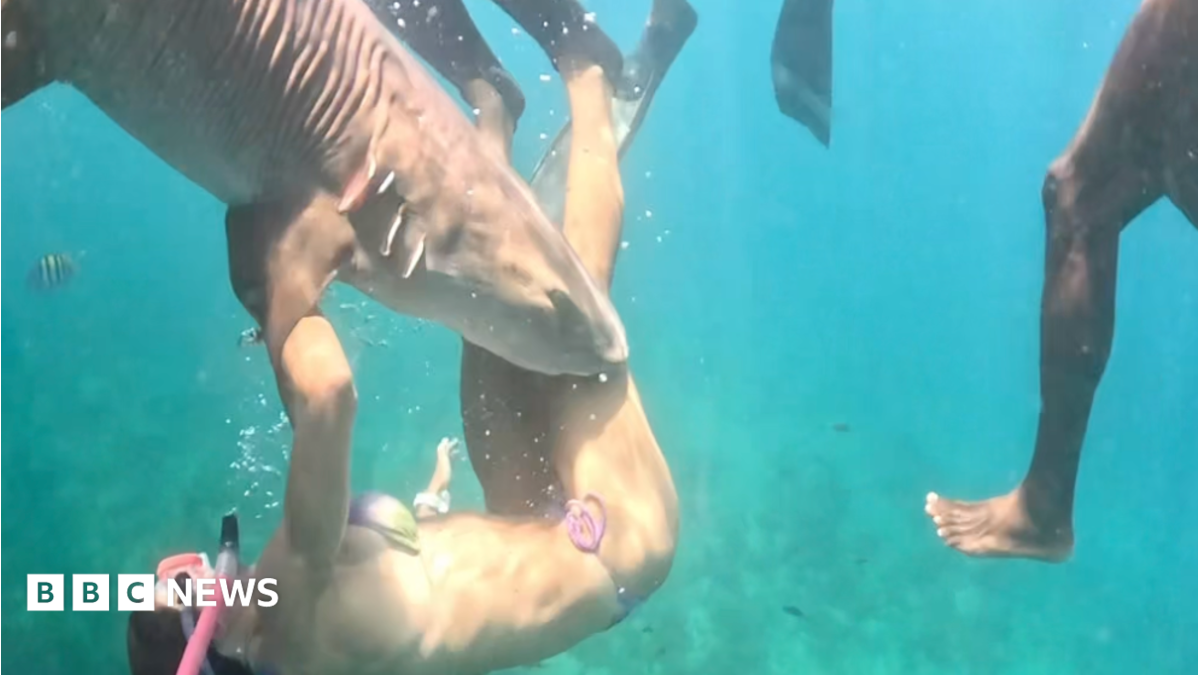
Shark bites involving humans are extremely rare, but at least three social media influencers have reportedly been bitten by sharks in the past year. Scientists are increasingly concerned about the growing number of videos showing people swimming with, touching or riding dangerously close to wild sharks.
“I watch these videos every week now, much more often than I used to,” said Christian Parton, a shark scientist and host of the YouTube channel “Shark Bytes.” “We are going to see people involved in serious shark incidents.”
In July, a fishing influencer was attacked by a great white shark while spearfishing and nearly lost his leg. In December, a Chinese content creator was bitten by a shark in the Maldives. Both encounters were recorded on camera.
Researchers at the International Shark Attack File, which monitors shark bites and other human-shark interactions worldwide, told the BBC that the number of people bitten while attempting to film sharks has increased noticeably over the past three years.
Recent research on “swimming with wildlife” expeditions, external found that influencers and photographers were among the people most likely to ignore safety instructions.
Last February, a tourist in the Caribbean Sea reportedly lost both hands after attempting to photograph a bull shark from shallow water, according to local authorities. Two months later, a snorkeler carrying a selfie stick was reportedly attacked and killed by a shark while trying to take a photograph in Israel.
Despite these incidents, the overall risk of a shark bite remains extremely low. The number of unprovoked shark attacks worldwide has stayed relatively stable for the past 30 years, averaging about 70 incidents annually.
Tayane Darazen was bitten by a nurse shark, a species generally considered more docile. However, some influencers have been photographed touching tiger sharks and even great white sharks—behaviour experts warn can be extremely dangerous.
“We are talking about true apex predators and very large wild animals,” Parton said. “You would not enter the Serengeti and put your hand on a lion’s face.”
Parton added that sharks may respond with defensive or exploratory bites when humans enter their personal space or behave in ways the animals perceive as threatening.
Human contact can also cause significant stress to sharks. Scientific research suggests that approaching or touching a shark can trigger the release of high levels of hormones called glucocorticoids. These stress responses may reduce immunity, increase mortality risk and contribute to the miscarriage of offspring.
“If you approach sharks and stress them in nursery, breeding or feeding areas, you are disturbing habitats that are essential to their survival,” Parton said. “That is a serious problem.”
One of the best-known shark content creators is Ocean Ramsey, a 38-year-old former model. She rose to international attention in 2019 after being photographed swimming alongside what was described as the largest great white shark ever recorded.
Source: www.bbc.co.uk