


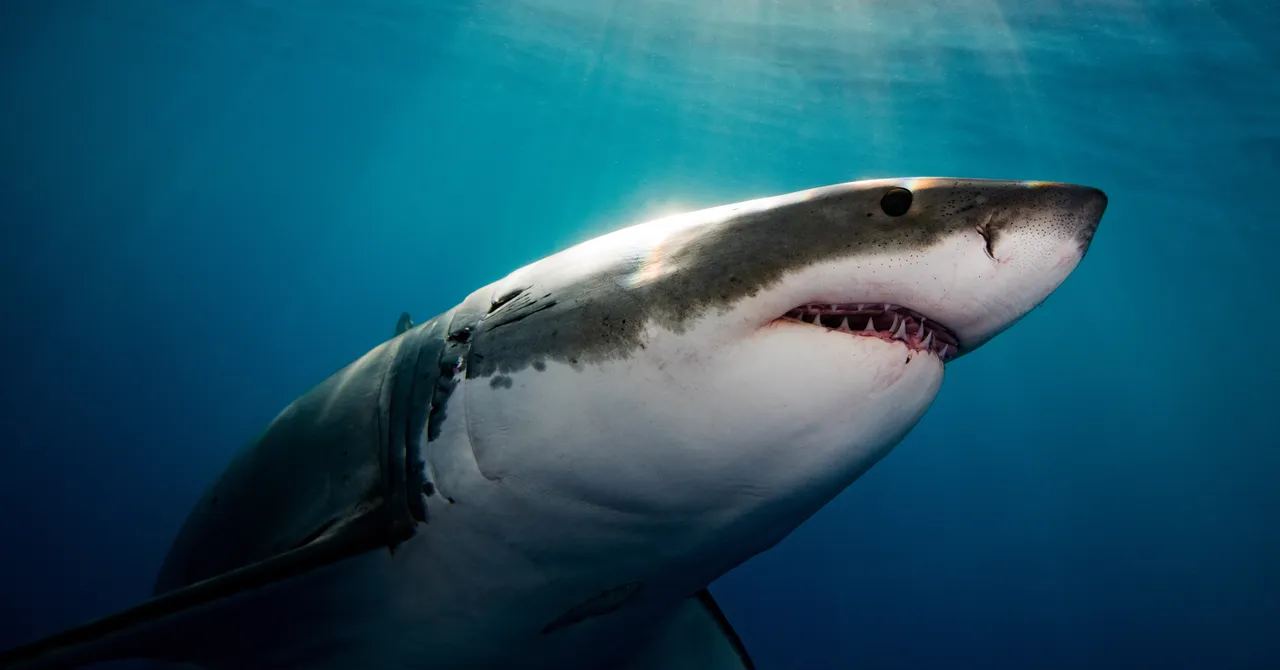
Great White Shark Dragged Maine Lifeguard Underwater During Routine Patrol
Lifeguard Greg Wilfert was swimming off the coast of Scarborough, Maine, in August when a powerful force on a rescue buoy pulled him underwater. Wilfert, who has worked as a lifeguard for 55 years, initially thought he had been caught in a boat propeller. The culprit was a great white shark, according to local news outlet WFSB.
The incident was one of a string of great white shark sightings off the Maine coast this year. Although shark sightings have increased elsewhere along the East Coast, Maine experienced a particularly active summer. More than a dozen sightings were reported over two days near Pine Point Beach in southern Maine in August.
Beaches across the state were temporarily closed after multiple shark sightings in July and August. Great white sharks were also found off Wells Beach during Labor Day weekend. A fisherman later caught another great white at Higgins Beach in Scarborough, about 30 miles down the coast.
Why are more great white sharks being seen in Maine?
The waters off Maine are among the fastest-warming in the world, and the Atlantic Ocean has experienced a series of marine heatwaves. El Niño events can also contribute to higher global temperatures. However, experts told WIRED that the recent increase in shark encounters—particularly those involving great whites—is more complex than simply attributing it to climate change.
Conservation efforts that began decades ago may be helping shark populations recover, while improved shark-spotting technology is allowing more people to detect the animals near beaches.
Great white shark populations are recovering
When Steven Spielberg’s classic movie Jaws appeared in 1975, great white sharks were in trouble. The species had declined in waters off both the East and West coasts of the United States because of overfishing, bycatch and trophy hunting. In the 1990s, federal protections were enacted for both great white sharks and one of their main prey species, gray seals.
Maine’s shark-monitoring system uses acoustic telemetry. The technology attaches tags to sharks that emit unique electronic signatures. Underwater stations detect those signals and record the movements of tagged sharks along the coast.
Maine’s monitoring program is less than 10 years old, and not every shark is tagged. As a result, researchers cannot yet determine exactly what is driving the increase in sightings, said Matthew Davis, a shark expert with the Maine Department of Natural Resources.
Still, Davis and Walter Golett, an associate professor at the University of Maine’s School of Marine Science who collaborates on the shark study, believe more great whites were off the Maine coast this summer than in previous decades. They attribute the increase in part to federal protections.
Male great white sharks take about 26 years to reach adulthood, while females can take up to 33 years. That timeline overlaps with the introduction of federal protection measures and may help explain why more sharks are now appearing off Maine. Research generally supports this explanation: one study and another study found that protections for sharks and seals contributed to population growth along the East Coast.
Climate change may also be changing shark ranges
Climate change is causing major changes in the ocean, with many species moving north as water temperatures rise. Its direct effect on great white sharks is less clear, however. Some studies suggest that extremely warm ocean temperatures may cause overheating, forcing great whites to slow down or move into cooler water in search of food.
Great white sharks can tolerate a wider range of ocean temperatures than many other shark species because they can regulate their body temperature, said James Sulikowski, director of the Oregon Coastal Marine Laboratory at Oregon State University.
Source: www.wired.com